Introduction
When an optometrist shines a bright light into your eyes, you may notice a strange pattern—a vast, branching tree that appears to sprout across your field of vision. This is not an illusion but the shadow of the blood vessels that nourish your retina. Though we normally remain unaware of them, these vessels constantly block a small portion of the light entering our eyes, creating a permanent—but invisible—veil over everything we see. This phenomenon reveals a fascinating trade-off in the design of the vertebrate eye: how evolution balanced the need for a rich blood supply with the demand for clear, unobstructed vision.
The Retina’s Hidden Network
Deep inside the eye, the retina—a thin layer of nerve tissue—is responsible for converting light into electrical signals that travel to the brain. To function, the retina requires a constant supply of oxygen and nutrients, which is delivered by a dense network of blood vessels. These vessels lie in front of the photoreceptor cells, meaning they inevitably cast shadows onto the light-sensitive layer. This is the same reason you see the “tree” when a bright light is shone into your eye: the light is strong enough to make the shadows of these vessels visible against the bright background.
Why We Normally Don’t See Them
Under normal lighting conditions, the brain performs a remarkable trick: it ignores the shadows. Through a process called perceptual filling-in or “neural completion,” the visual system seamlessly fills in the gaps caused by the vessel shadows, creating a continuous image. The shadows are always there, but we never notice them unless a bright light temporarily overwhelms the brain’s compensatory mechanism. This adaptation is essential because the vessels are anchored in place—they cannot move out of the way—and their shadows are constant. Evolution has therefore equipped us with a neural “eraser” that hides this internal obstruction from conscious awareness.
The Evolutionary Trade-Off
The fact that blood vessels sit in front of the photoreceptors seems like a design flaw. Why would evolution place a light-blocking structure in front of the very cells that need to capture light? The answer lies in the retina’s high metabolic demand. The photoreceptors and associated neurons require enormous amounts of oxygen and glucose, far more than can be supplied by diffusion alone. Placing the blood vessels behind the retina would either require the vessels to run through the light-sensitive layer (disrupting it) or would leave the retina starved of nutrients.
An Extreme Solution
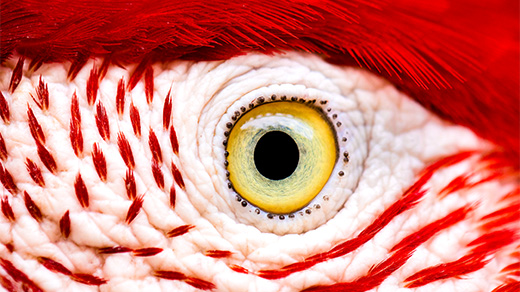
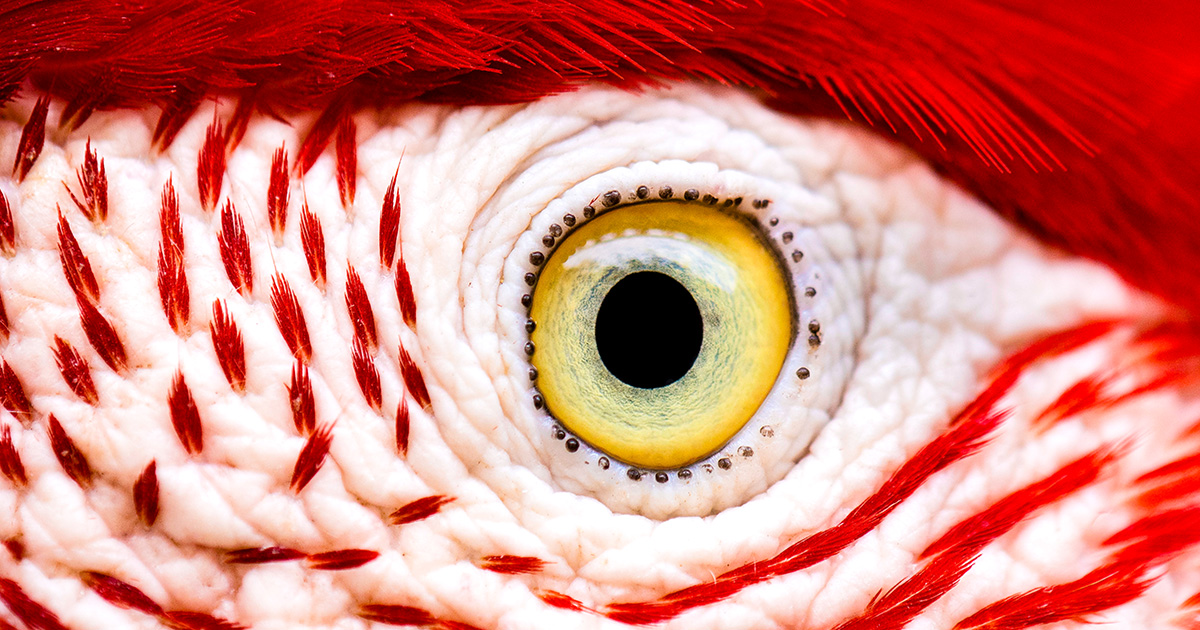
In birds, this trade-off has been pushed to an evolutionary extreme. Many bird species have a highly specialized structure called the pecten oculi, a comb-like projection of blood vessels that extends into the vitreous humor from the retina. The pecten is thought to provide an exceptionally rich blood supply to the retina, enabling the high-resolution vision needed for flight, hunting, and navigation. In some birds, the pecten may cast even more prominent shadows than the human retinal vessels, but their brains have similarly evolved to ignore them. This extreme adaptation highlights how the need for oxygen can override the optical cost of shadows, leading to extraordinary anatomical solutions.
What Happens When the System Fails
When the brain’s ability to ignore vessel shadows is impaired—for instance, due to certain neurological conditions or eye diseases—patients may report seeing the “ghost” of blood vessels in their vision. This symptom, known as the blue field entoptic phenomenon in a mild form, can become persistent in cases of retinal vein occlusion or other vascular disorders. Understanding the mechanism of shadow suppression is thus important not only for evolutionary biology but also for clinical ophthalmology.
The Role of the Optometrist
An optometrist uses the bright-light test to observe the shadow pattern and assess the health of the retina and its vasculature. Changes in the shape, size, or visibility of the vessel tree can indicate conditions like hypertension, diabetes, or retinal detachment. This simple test is a window into the otherwise hidden world of the eye’s blood supply and the evolutionary compromises that shape our vision.
Conclusion
The shadow of blood vessels is a constant yet unseen feature of our visual world. It is a testament to the ingenuity of evolution—how a potential flaw is overcome by neural adaptation, and how extreme demands, such as those faced by birds, can drive the development of even more elaborate vascular structures. Next time you have your eyes examined, and the branching tree appears, remember that you are glimpsing the very infrastructure that powers your sight, silently working behind a veil of invisibility.